
I’ve been working with Xabier Lopez, counselling trainee and content designer, to develop some images and infographics to illustrate the therapeutic process and the development of mental wellbeing. I love his style. You can see more of his designs at https://xabierlopez.co.uk/
Retro
Xabi’s recent retro-style work has been inspired by Saul Bass, an American graphic designer and filmmaker, best known for his design of motion-picture title sequences, film posters, and corporate logos, including for Hitchcock, Kubrick, and Scorsese.
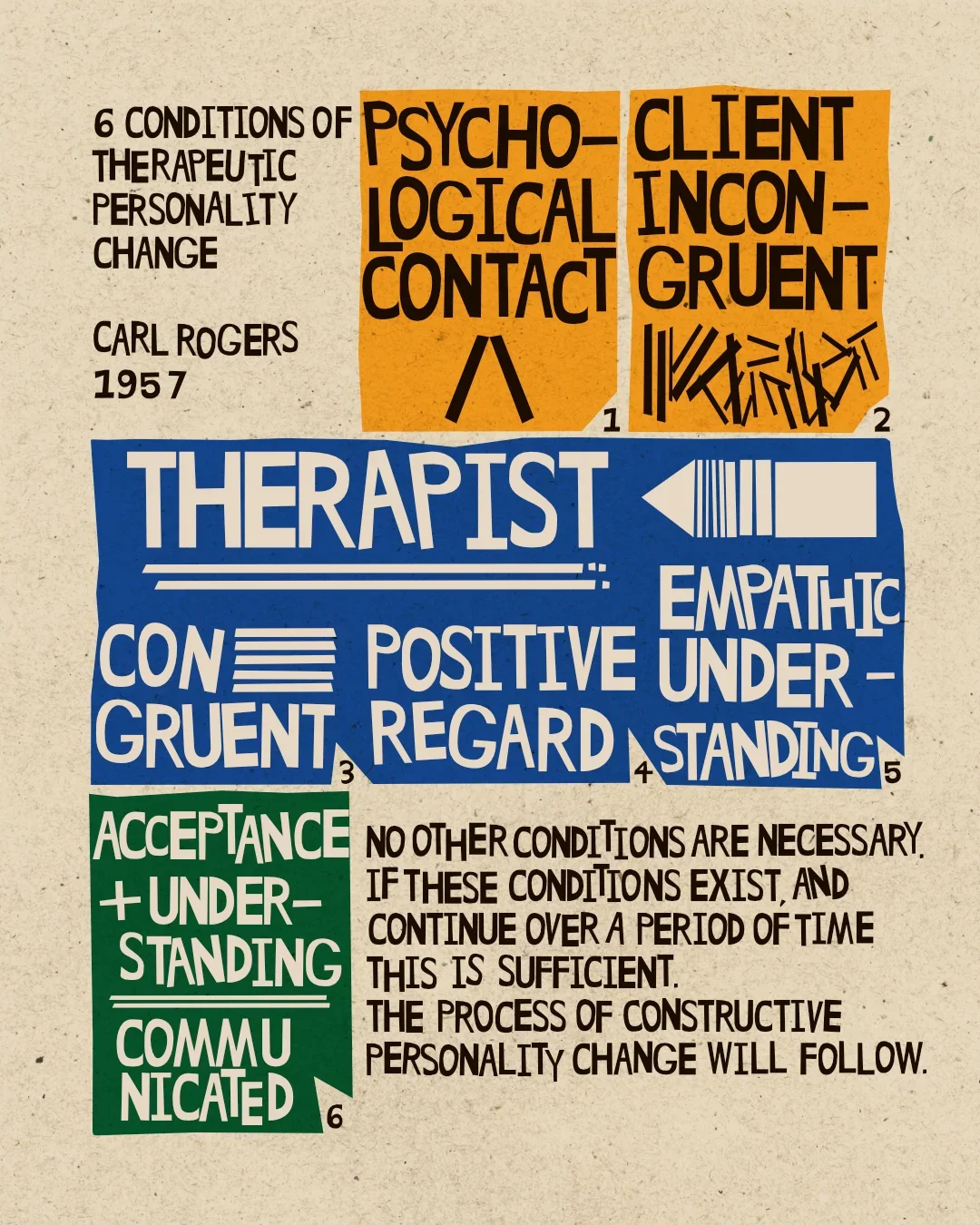
Carl Rogers famously hypothesised that there were six conditions necessary and sufficient for therapeutic personality change
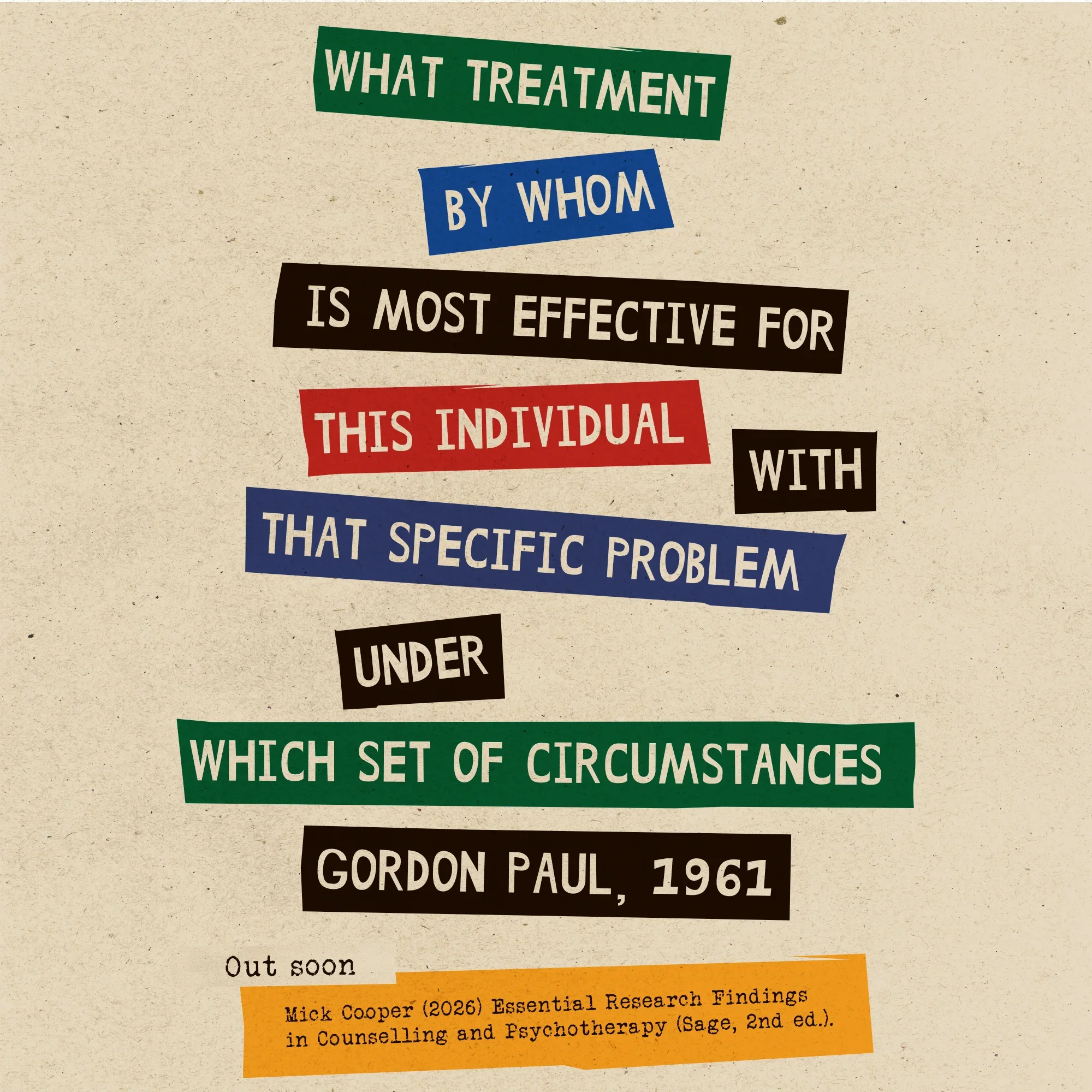
By contrast, psychologist Gordon Paul highlighted the different needs that different clients may have at different points in time
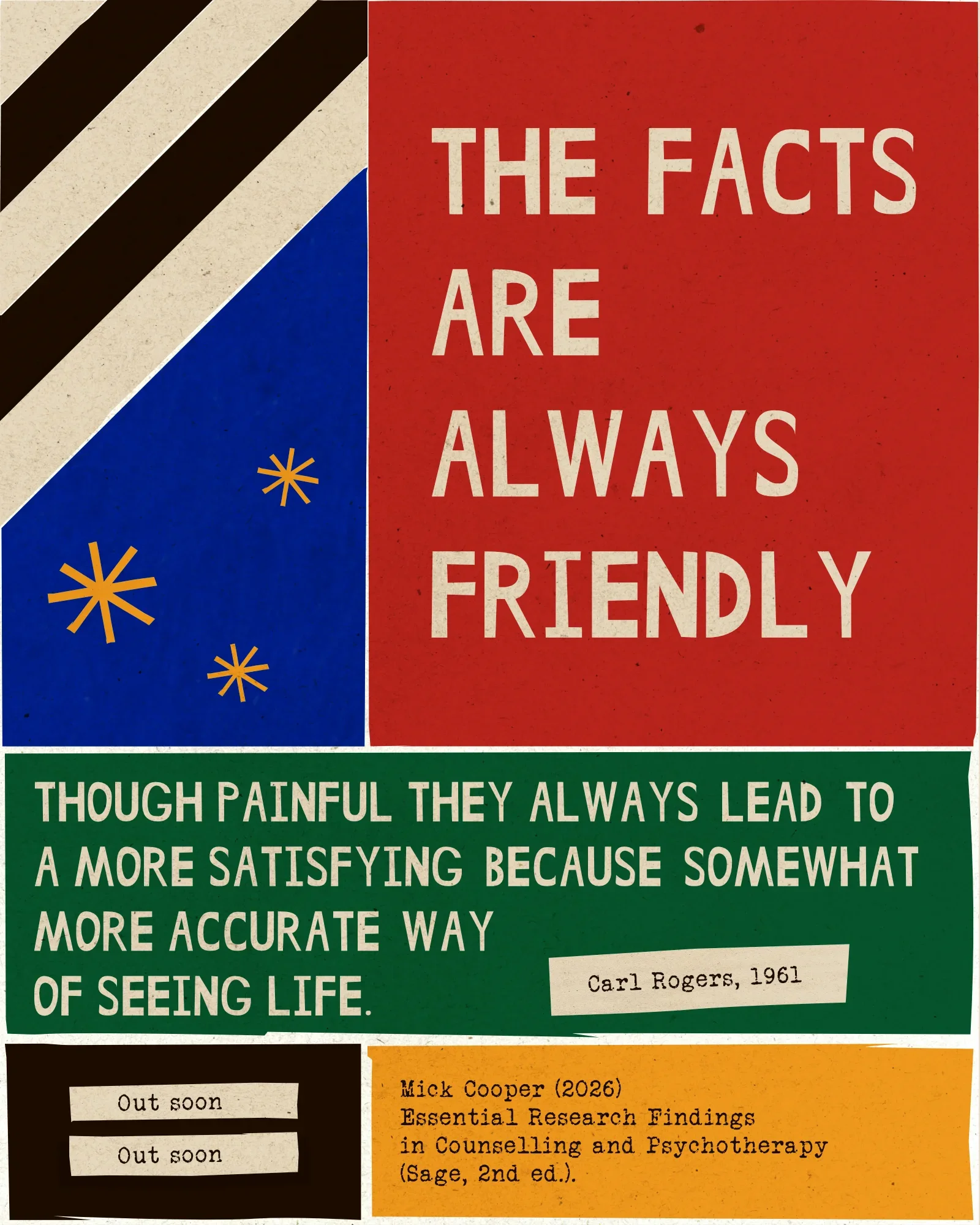
Irrespective of the therapeutic approach adopted, Carl Rogers encouraged us to always be open and receptive to the evidence—even if it challenges our cherished beliefs.

An important element of any therapeutic process is helping clients to make sense of themselves and the ways they relate to others. A widely-used taxonomy categorises people in terms of how they ‘attach’ to others.
Infographics
We’ve also been working on images that can present information, data, or ideas in counselling and psychotherapy is quick, clear, and fun ways. Both of us love the book Information is Beautiful.
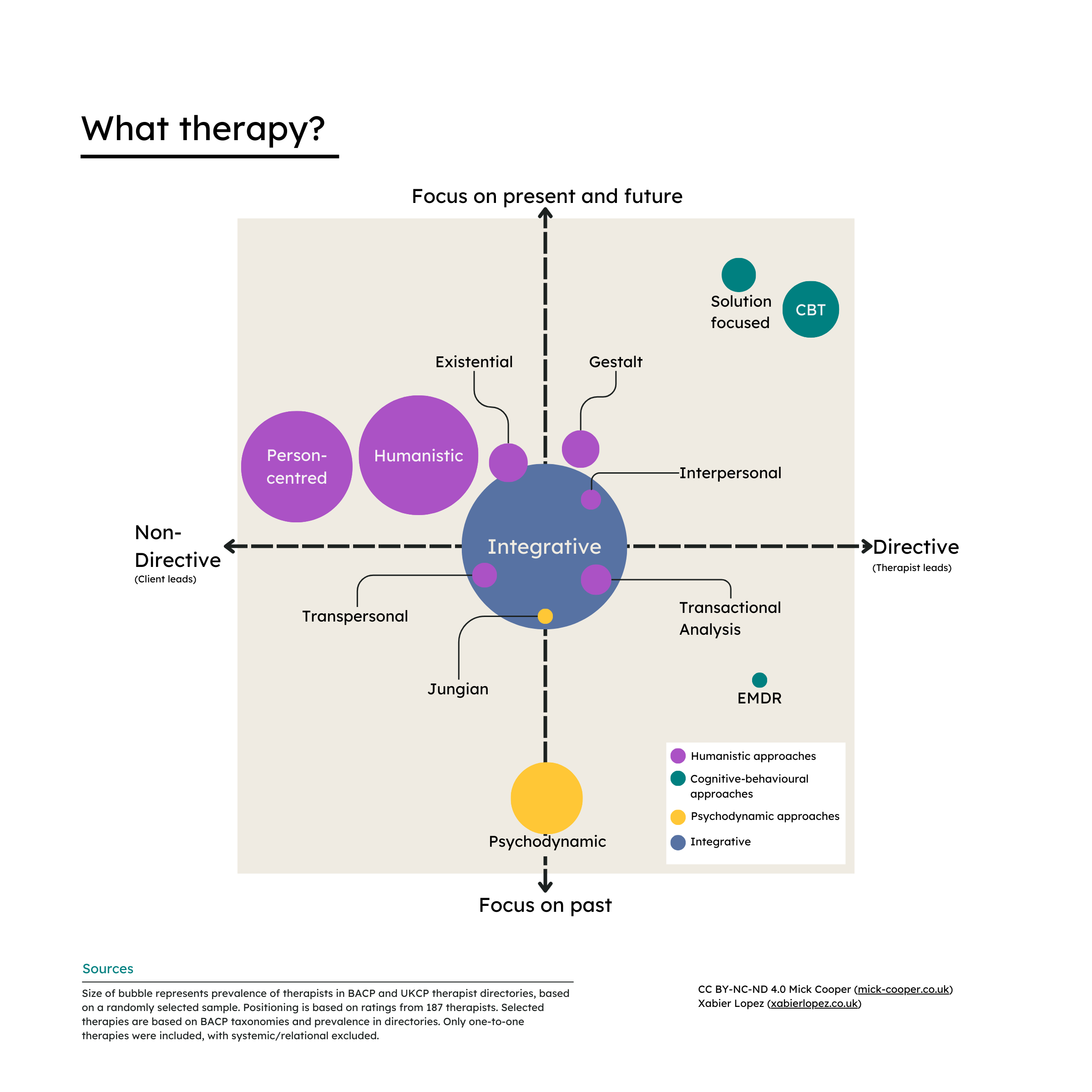
Today, there are many different forms of therapy available. This infographic positions the different orientations on two axes: the degree to which the therapist takes a lead, and the extent to which they focus on the client’s past or present.
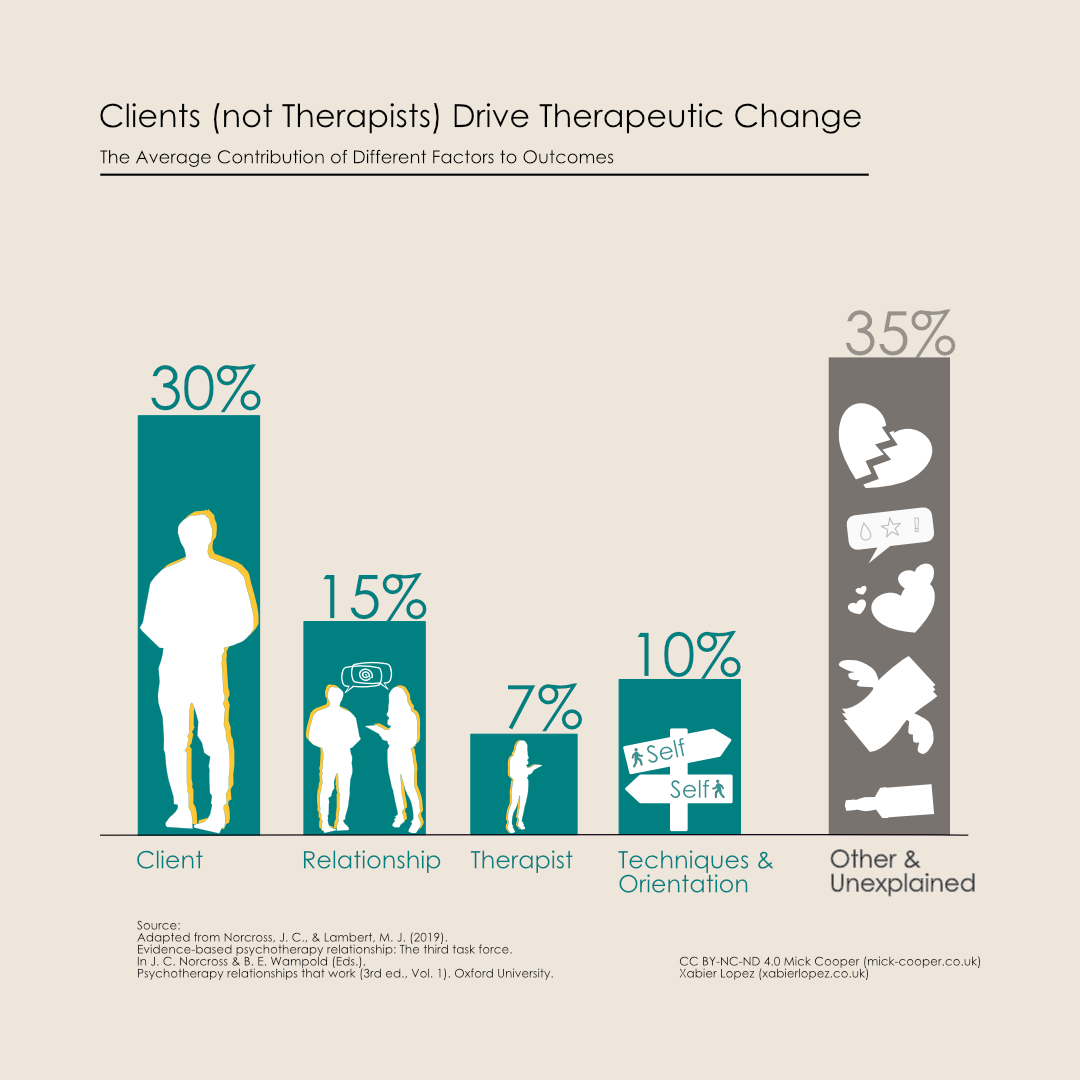
As therapists, we can get overly-focused on the contribution that we, ourselves, make to therapeutic change. In fact, the research suggests that it is the client, rather than the therapist, that is the ‘hero’ of the therapeutic work.
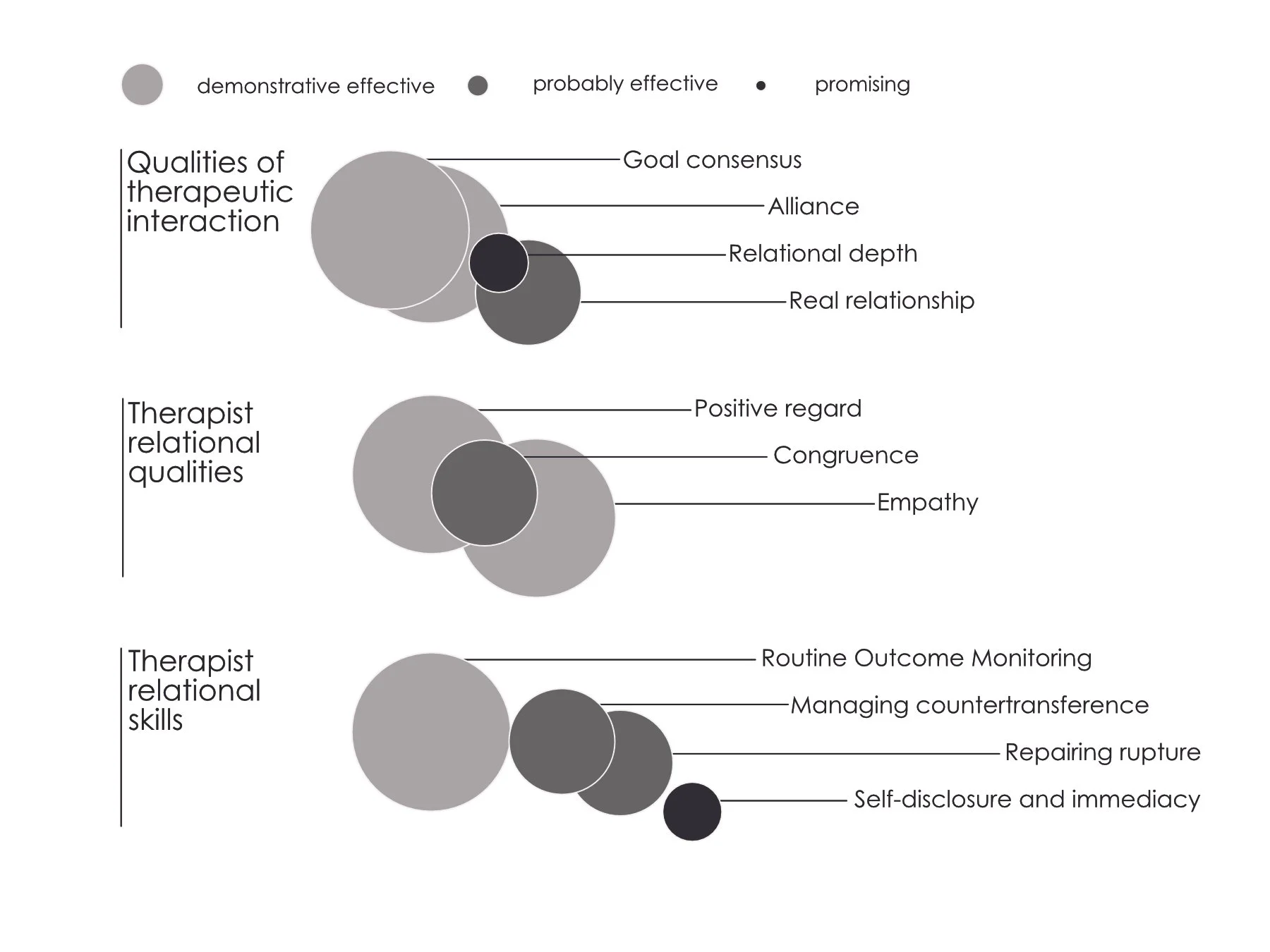
Outside of client factors, it’s the therapeutic relationship that shows the strongest association with positive change. This infographic shows the kinds of relationship factors that the evidence suggests are most strongly associated with positive outcomes
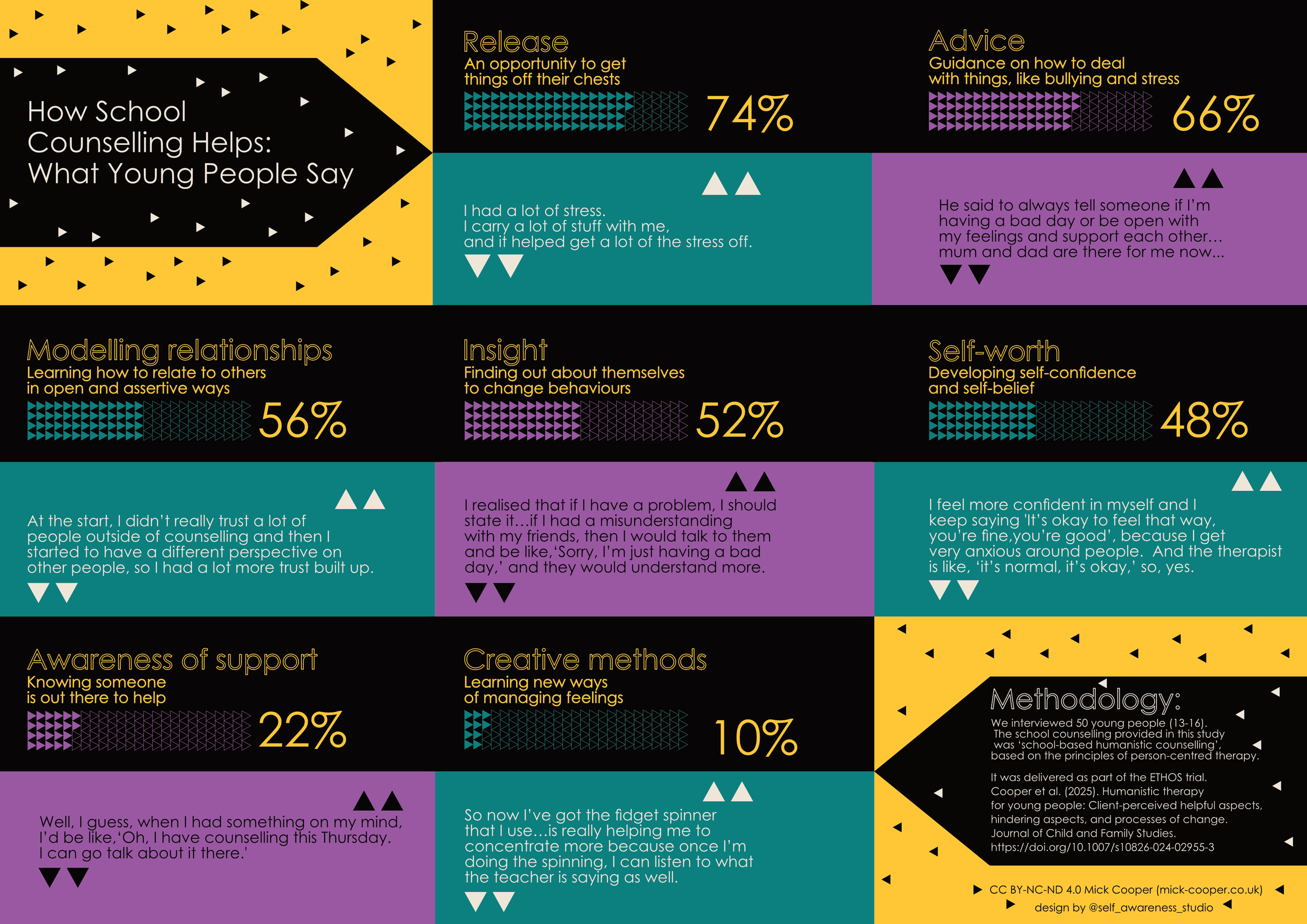
What does the evidence actually tell us about change? In this infographic, we present the findings from a qualitative study of young people’s experiences of humanistic school counselling, identifying seven pathways by which the therapy could make a difference. You can see the paper here
Notes
To see more of Xabi’s work, go to https://xabierlopez.co.uk/